









































Bengaluru, July 28 (Karnataka Information):
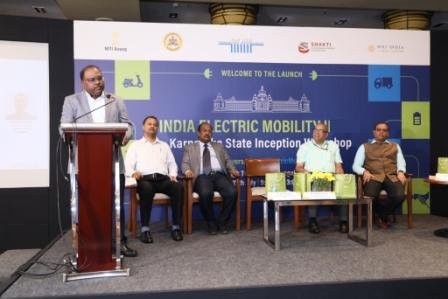
The Government of Karnataka, in collaboration with NITI Aayog and World Resources Institute India (WRI India), today held an event to accelerate e-mobility adoption in Karnataka. The workshop is the first of several state-level engagements to lay the groundwork for a dynamic platform that will mobilize and support states in their e-mobility transition.
Electric mobility is an integral part of India’s decarbonization strategy aligned with the country’s 2070 Net Zero emissions objectives. India is one of the world’s top auto manufacturers and during the FY 2022 it produced around 22.93 of. Millions are employed in the Indian automotive industry, which accounts for 7% of the GDP.
To ensure that the sector thrives and continues to contribute to India’s economic growth and job creation, India must keep pace with the global advancement of electric mobility. This includes all aspects of the Electric Vehicle (EV) ecosystem including the development of R&D for high value-added industries and innovation to support technological advancements, battery manufacturing and other component manufacturing.
Giving the keynote address Sudhendu Sinha, Adviser (Infrastructure Connectivity – Transport and Electric Mobility), NITI Aayog, said, “Karnataka is the first state to have adopted an EV policy amongst the 30 states who have declared, or are in the process of announcing, an EV policy. State action is vital for a successful e-mobility transition, and states can learn from each other to replicate and scale up good practices.”
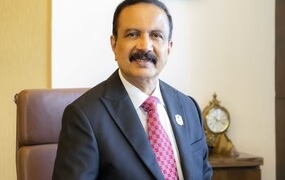
Dr. N V Prasad said, “The Government of Karnataka has pledged to promote cleaner transportation in line with the goals of the Indian government by being the first state to publish a state-level EV policy in 2017. This initiative aims to support the faster development of electric vehicles in India by assisting states in measuring their progress and gaining a deeper understanding of state-level policies and regulations that will have the greatest impact on EVs.”
Dr. Selva Kumar added, “The Department of Skill Development is introducing a lot of courses through its Industrial Training Institute (ITI) and tool room training centers. Of the 11 long-term courses which have been approved by the National Council for Vocational Education and Training, (NCVET) Delhi, one is about the electric mobility eco-sytem. Of the 23 short term courses that have been approved, three courses are designed for the electric mobility ecosystem. This will help in building the skills required for the EV industry.
Pawan Mulukutla, Director, Clean Mobility and Energy Tech, WRI India, “The measurement aspect or the feedback to the EV ecosystem is extremely critical for its development. This will help us identify gaps in policies and their implementation. This initiative will continuously help bridge these gaps which in turn will create jobs, improve the quality of life, bring in investments in the manufacturing sector and develop a robust policy framework.