











![[ L to R ]Mr. Rohan Ganapathy, Co-Chairman, CII National Committee on Space; Mr. Mallavarapu Apparao, Chairman, CII National Committee on Space; Ms. Jaya Choraria, Deputy Trade Commissioner for South Asia, UK; H.E. Mr. Antonio Bartoli, Ambassador of Italy to India; Dr. Pawan Goenka, Chairman, IN-SPACe; Dr V. Narayanan, Secretary, Department of Space; Chairman, Space Commission; and Chairman, ISRO; Mr. Shashwat Goenka, Vice President, CII; H.E. Mr. Philip Green OAM, High Commissioner of Australia to India; Mr. ISHII Yasuo, Senior Vice President, JAXA; Mr. Radha Krishnan A, Chairman and Managing Director, NSIL](https://24x7newsworld.com/wp-content/uploads/2026/09/Screenshot-2026-09-08-at-20-52-52-DSC_6125.JPG-JPEG-Image-6048-×-4024-pixels-—-Scaled-14_-360x180.avif)














- Specialist workshop brings together neurologists and ENT experts from India and global to flag rising cases, diagnostic gaps, and need for structured clinical evaluation of vertigo in India
Bengaluru, India, 4th April 2026 – Vertigo and balance disorders are emerging as a significant yet under-recognised health concern in India, with clinicians noting that a substantial proportion of patients presenting with dizziness are either misdiagnosed or treated symptomatically without identifying the underlying cause. Approximately 15% to over 20% of adults experience vertigo or dizziness annually, with the prevalence peaking in adults aged 55–64. This statistic highlights the significant impact of these symptoms on a large population, particularly among the elderly.[1]
Despite its prevalence, vertigo is often dismissed as a minor ailment, leading to delays in diagnosis, prolonged discomfort, and, in some cases, missed identification of serious neurological conditions.
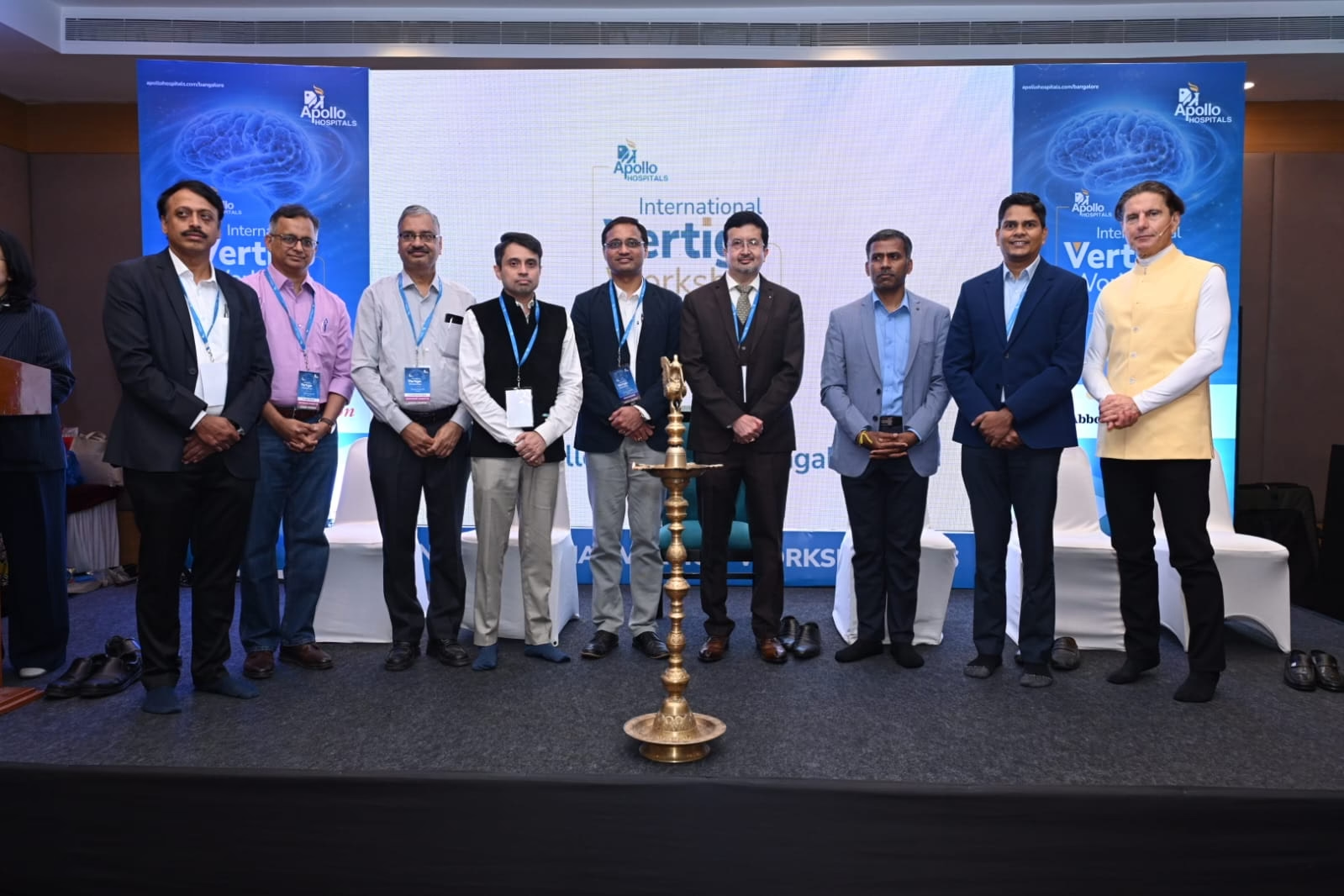
Against this backdrop, and at a time when research highlights wide variation in how vestibular disorders are diagnosed and treated, Apollo Hospitals convened a focused clinical workshop aimed at strengthening frontline understanding and improving diagnostic accuracy in vertigo care.
The workshop brought together neurologists, ENT specialists, and general physicians in a hands-on, case-led format designed to move beyond theory. Sessions covered structured patient history-taking, bedside examination of vestibular and ocular motor systems, and systematic approaches to identifying the root cause of vertigo. Participants were guided through differentiating peripheral, central, and functional vertigo—categories that often overlap in presentation but require distinct treatment pathways.
Dr. Suryanarayana Sharma PM, Senior Consultant Neurologist & Stroke Specialist Academic Advisor, Dept.of Neurology said, In India more than 70 million people are suffering from vertigo. Though 74% of them are benign, recognition of red flags and serious neurological/ ENT conditions are very important. This needs a multidisciplinary team approach. Vertigo clinics are more important in current context”.
Dr. Sunil Narayan Dutt, Senior Consultant and Clinical Advisor, Dept.of ENT, pointed to the need for more practical, experience-led training formats for clinicians. “This approach needed to incorporate “hands-on” sessions and live-via-case discussions where the physician has the opportunity to build confidence when attempting to assess patients who require care related to vertigo. The necessity of hands-on training is especially relevant for physicians who are working in busy clinical settings where the resources and time are limited.”
Adding an international perspective, International Faculty, Dr. Michael Strupp, a renowned Neurologist & Vestibular Expert, a globally recognised expert in vestibular disorders, led sessions on peripheral, central and functional vertigo, underlining the importance of precise classification. “Advances in vestibular medicine have made many vertigo conditions highly treatable. The challenge is no longer lack of treatment but ensuring that the right diagnosis is made early through structured clinical evaluation,” he said.
Experts at the workshop also noted that vertigo is increasingly being recognised in association with broader neurological and post-viral conditions, adding to its complexity and reinforcing the need for timely and accurate diagnosis.
The workshop concluded with interactive case-based discussions and an open Q&A, enabling clinicians to engage directly with experts and refine their diagnostic approach in complex scenarios.
With vertigo cases rising due to lifestyle factors, ageing populations, and greater awareness, improving diagnostic precision at the first point of care remains critical to reducing unnecessary investigations and ensuring better patient outcomes.
[1] https://emedicine.medscape.com/article/2149881-overview