





































Bengaluru 25th Feb 2026 : In India, nearly six crore people suffer from vertigo and balance disorders, yet many are misdiagnosed or managed only with symptom-suppressing medication instead of addressing the root cause. FutureCure Health Private Limited, a super-speciality healthcare provider, is working to bridge this gap by expanding access to evidence-based care for vertigo and balance disorders through its wholly owned subsidiary, NeuroEquilibrium, which focuses on accurate diagnosis and targeted treatment of these conditions.
Most approaches treat symptoms. NeuroEquilibrium – the world’s largest chain of vertigo clinics – identifies the root cause of vertigo — whether in the inner ear, brain, or balance system — so the treatment is targeted, not temporary. Working closely with hospitals, ENT clinics, and neurology centres, NeuroEquilibrium has diagnosed and treated over 150,000 patients, significantly improving long-term outcomes.
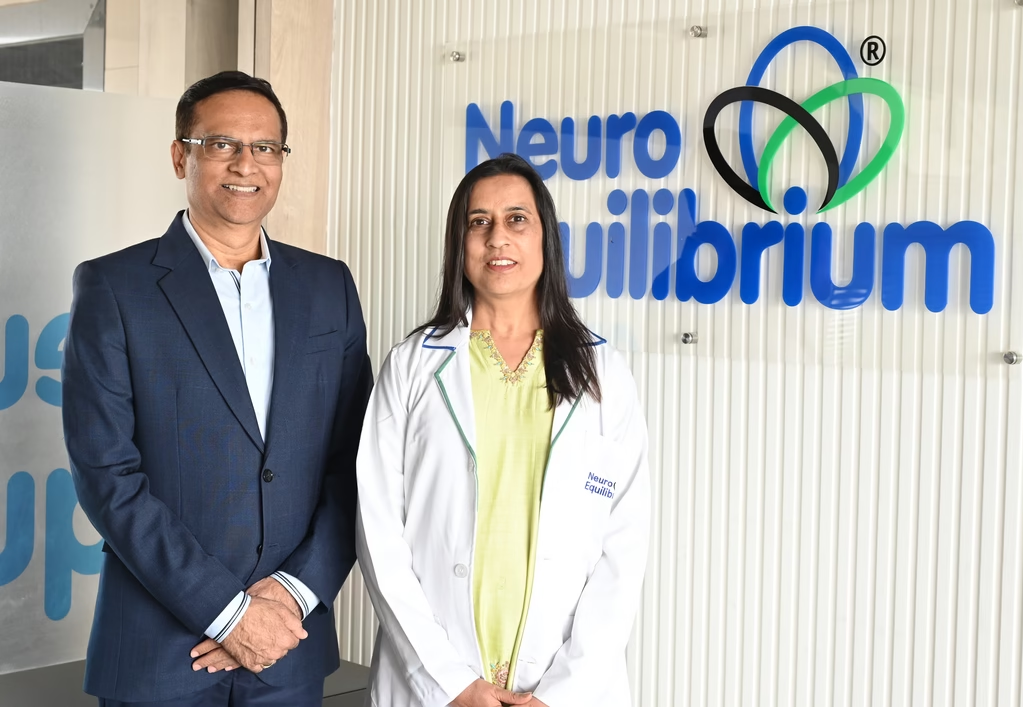
Dr. Anita Bhandari, Founder, FutureCure Health, added: “Vertigo/dizziness is often misdiagnosed, leaving patients untreated for years. Our work with more than 150,000 patients proves that accurate diagnosis changes outcomes. This funding will help us take specialised vertigo care global.”
NeuroEquilibrium currently operates 16 clinics in Bengaluru, covering Hebbal, Sahakar Nagar, Kodigehalli, Malleswaram, Whitefield, Kundalahalli, Kalyan Nagar, Hennur, JP Nagar, Arekere, HSR Layout, Electronic City, and Frazer Town.
FutureCure Health recently raised Rs 104 crore in a completed funding round, led by Carnelian Asset Management LLP and other investors. The fundraising follows an earlier USD 4 million round in 2022 backed by Kotak Alternate Asset Management, RVCF Ventures, and Unicorn India Ventures.
Rajneesh Bhandari, Founder, FutureCure Health, said: “This funding has reinforced our conviction that globally relevant healthcare technologies can be built in India. As we scale NeuroEquilibrium across hospitals in India and international markets and expand into chronic lifestyle diseases such as migraine and diabetes, our focus is on using technology to bridge the shortage of specialist doctors. Precise, scalable diagnostics can democratise super-speciality healthcare and act as a true force multiplier for better outcomes.”