




























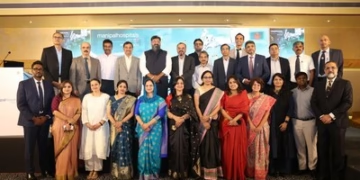

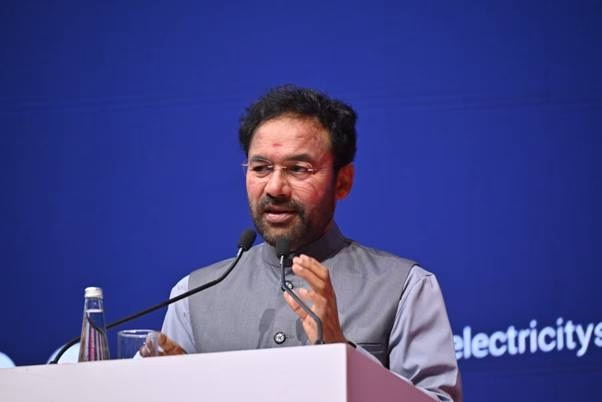
Union Minister of Coal & Mines, G. Kishan Reddy, along with Minister of State for Coal & Mines, Satish Chandra Dubey, will launch the 7th Tranche of Auction of Critical and Strategic Mineral Blocks on March 23, 2026.
Critical minerals are pivotal for the country’s economic development and mineral security. The global transition towards clean energy and advanced technologies has significantly increased the demand for minerals such as lithium, graphite, rare earth elements (REE), tungsten, vanadium, titanium and other rare metals. Their limited availability and geographical concentration pose challenges to resilient supply chains worldwide.
Recognising their strategic importance, the Government of India amended the Mines and Minerals (Development and Regulation) Act, 1957 (MMDR Act) on 17 August 2023, notifying 24 minerals as Critical and Strategic Minerals. This amendment empowers the Central Government to auction Mining Leases and Composite Licences for these minerals. The revenue generated from these auctions accrues to the respective State Governments.
So far, the Ministry of Mines has successfully launched six tranches of auctions, with 46 critical and strategic mineral blocks already auctioned, reflecting strong industry participation and growing confidence in India’s mineral sector.
Building on this momentum, the Seventh Tranche will offer 19 blocks across several States under Mining Lease and Composite Licence. These blocks comprise a diverse basket of minerals essential for sectors such as clean energy, advanced technologies, fertilizers and strategic industries.
The auction framework has been progressively strengthened to ensure transparency, efficiency and faster operationalisation of mineral blocks. Recent reforms, including the Mineral (Auction) Second Amendment Rules, 2025, have streamlined post-auction timelines such as submission of performance security, upfront payment and issuance of Letter of Intent. Additionally, the Mineral (Auction) Amendment Rules, 2026 have introduced the provision of Insurance Surety Bond as an alternative to bank guarantees, enhancing flexibility for bidders.
The auction will be conducted online through a transparent two-stage ascending forward auction process, wherein the successful bidder will be selected based on the highest percentage of value of mineral dispatched quoted.
Coal Gasification Key to India’s Energy Security and Industrial Growth: Union Minister G.Kishan Reddy
Union Minister for Coal and Mines, G. Kishan Reddy, today highlighted that coal gasification will be pivotal in strengthening India’s energy security, reducing import dependence, and supporting industrial growth, while addressing the Bharat Electricity Summit 2026.
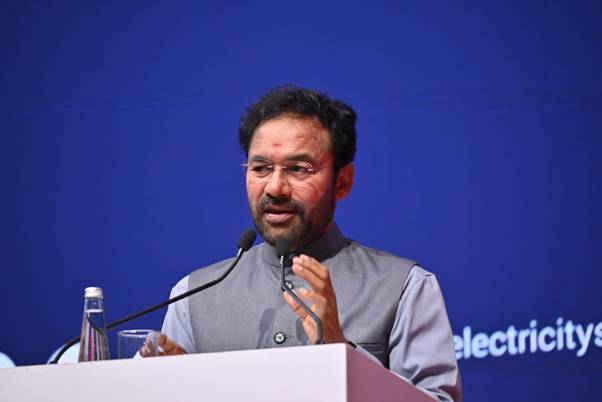
Addressing industry leaders, experts, start-ups, researchers, students, and policymakers, the Minister said India’s rapidly expanding economy requires a balanced energy approach that aligns development with sustainability. He noted that under the leadership of Prime Minister Narendra Modi, the country is experiencing strong growth across manufacturing, infrastructure, digital connectivity, and innovation.
The Minister underlined India’s robust coal reserves, estimating nearly 400 billion tonnes—among the largest globally—where coal accounts for about 55% of the energy mix and nearly 74% of electricity generation. With annual coal demand currently around one billion tonnes and expected to rise significantly by 2047, he emphasized the continued importance of coal. Even as India remains committed to achieving Net Zero emissions by 2070.
Describing coal gasification as a key transformative technology, he explained that it converts coal into syngas, which can be further used to produce cleaner fuels, chemicals, fertilizers, and hydrogen. This approach enables more efficient and sustainable use of domestic resources while enhancing economic resilience. He also pointed out India’s dependence on imports—approximately 83% of crude oil, 50% of natural gas, and over 90% of methanol and fertilizers—making energy security a strategic priority.
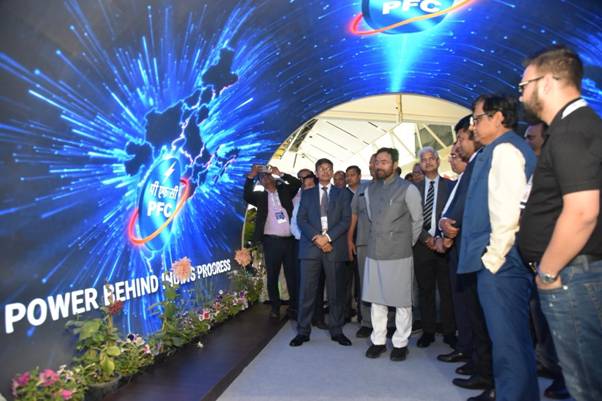
To promote adoption, the Government has launched the National Coal Gasification Mission with a target of 100 million tonnes of gasification by 2030. An incentive framework of ₹8,500 crore has been introduced to support public and private sector projects, with several large-scale initiatives already underway and investments exceeding ₹64,000 crore in the pipeline. Advanced technologies such as Underground Coal Gasification (UCG) were also highlighted for their potential to tap previously inaccessible reserves while reducing environmental impact.
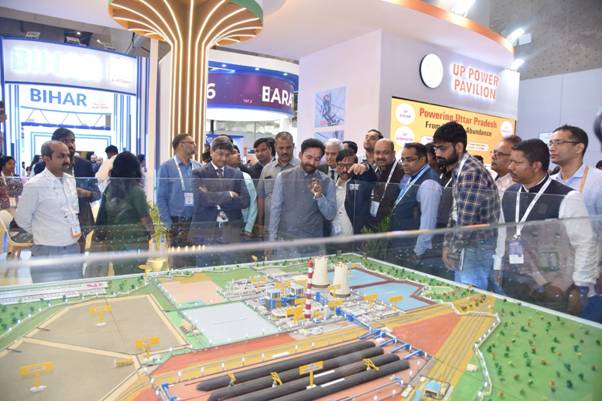
The Minister called for a collaborative ecosystem involving industry, academia, start-ups, and research institutions, noting that coal gasification spans multiple sectors including power, oil & gas, and fertilizers. He reaffirmed the Government’s commitment to streamlined approvals, supportive policies, and incentives to encourage early participation and investment.
He expressed confidence that with innovation, indigenous technology development, and coordinated efforts, India can emerge as a global leader in clean coal technologies while advancing energy security, sustainability, and self-reliance.