





























The event brings together global Investors, Innovators and Academia
Over 30 partnerships including innovation-focused MoUs and joint declarations signed at the event
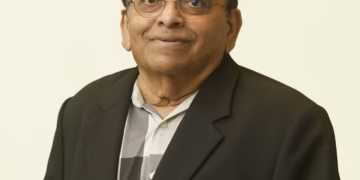
Higher Education and Research Institutions have a critical role in shaping value-led founders and technology leaders, N. R. Narayana Murthy
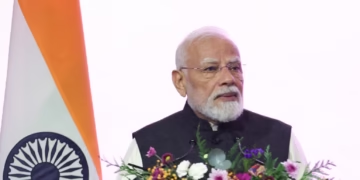
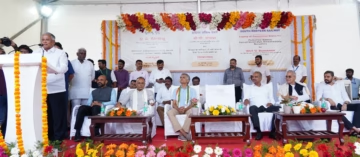
Prime Minister of India Narendra Modi and President of the French Republic Emmanuel Macron jointly inaugurated the maiden edition of Bharat Innovates 2026 at the Palais des Expositions de Nice, France yesterday. An initiative of the Government of India implemented by the Ministry of Education, this high-impact event serves as a premier platform for advancing innovation-led partnerships between India’s deep tech innovators and global stakeholders.

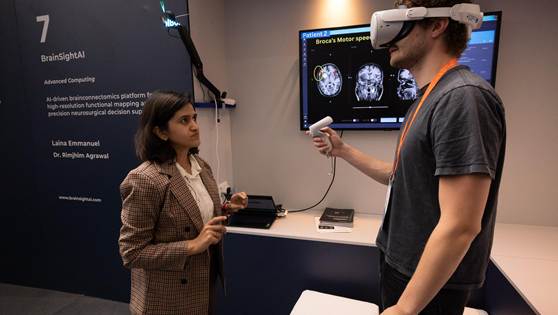
Showcasing India’s Deep Tech Ecosystem, Bharat Innovates 2026 highlights India’s rapidly growing innovation ecosystem by showcasing 120 Indian innovators, 15+ Higher Education Institutions (HEIs), and over 500 global stakeholders, including global CEOs, industry leaders, and leading venture capital firms. The event spotlights advancements across 13 key sectors, including advanced computing, semiconductors, space technology, biotechnology, energy, healthcare, and manufacturing.
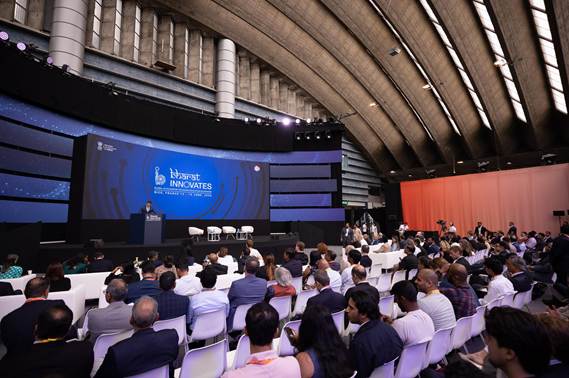

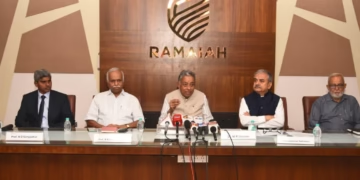
The first day of Bharat Innovates 2026 featured a rich programme of keynote addresses, strategic dialogues, and global industry discussions focused on strengthening international innovation corridors and deep-tech partnerships. The afternoon commenced with an opening keynote by Founder of Infosys, Shri N. R. Narayana Murthy, who emphasized the role of academic institutions in creating globally competitive technology enterprises. Drawing from the Infosys journey from an idea built with USD 250 to a globally respected technology institution he underscored that enduring enterprises are built through complementary talent, shared values, disciplined innovation, transparent governance and trust. He further highlighted that higher education and research institutions have a critical role in shaping value-led founders and technology leaders who can convert knowledge into innovation, innovation into enterprise, and enterprise into long-term societal impact.

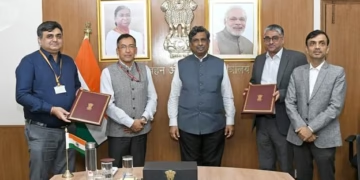
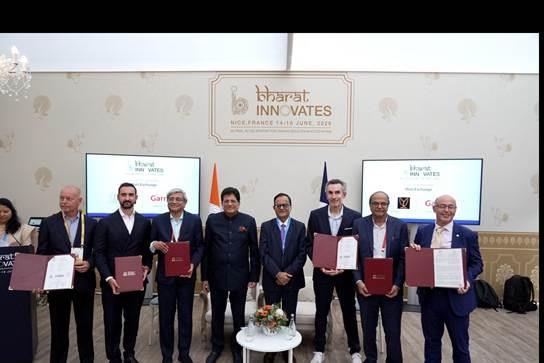
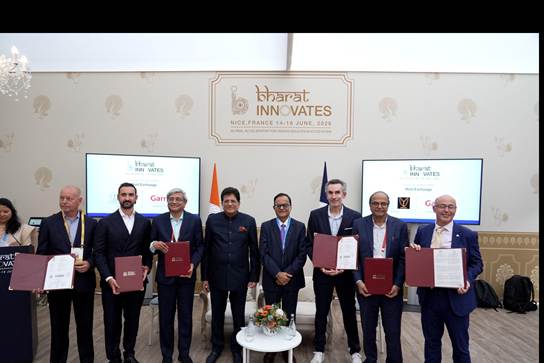
A major highlight of the event was the signing of over 30 partnerships including innovation-focused Memorandums of Understanding (MoUs) and joint declarations aimed at strengthening collaboration between Indian and global innovation ecosystems. These include 12 agreements between Indian Higher Education Institutions/incubators and French/global incubators to promote innovation, entrepreneurship, research collaboration, and startup support and 16 agreements with leading global corporations to facilitate technology development, commercialization, and market access for Indian innovators.
Additionally, 13 French universities signed partnership agreements with 11 Indian Institutes of Technology (IITs) and Indian Institute of Science (IISc) to enhance cooperation in student exchanges, joint research, innovation support, academic collaboration, and talent development. Further, the India-France ATL Bridge, established by Atal Innovation Mission, NITI Aayog, and La Foundation Dassault Systèmes, will extend India’s Atal Tinkering Lab framework to France by setting up the first School Innovation Lab in France and enabling collaboration among young innovators from both countries.
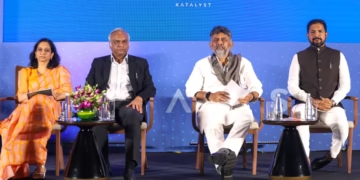
A panel discussion on “AI for Global Good: Building a Corridor for Trusted, Inclusive and Scalable AI” brought together leading voices from industry, investment, and research institutions to explore collaborative approaches to responsible artificial intelligence and sovereign technology development.
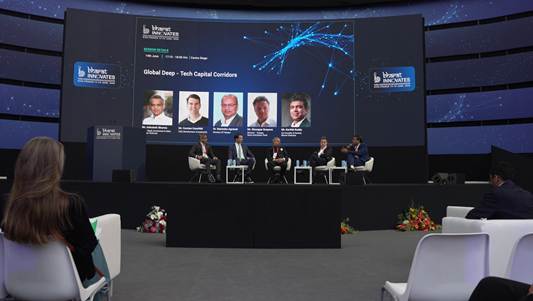

This was followed by sessions on “India and Europe: Deep Tech Without Borders” and “Global Deep-Tech Capital Corridors,” focusing on cross-border innovation ecosystems, venture financing, commercialization pathways, and global market access for emerging technologies.
At the Bharat Innovates 2026 plenary session on “AI for Global Good,” industry and policy leaders from India and France called for the creation of a trusted, inclusive, and scalable AI corridor. The discussion highlighted India’s strengths in affordable, localized AI solutions, the growing importance of sovereign AI capabilities, and the need for open-source collaboration over technological monopolies. Speakers emphasized joint R&D, investment partnerships, and an expanded international coalition to build a resilient and globally competitive AI ecosystem.
With high-level participation, strategic dialogues, and new avenues for collaboration unveiled, Day One of Bharat Innovates 2026 set the stage for deeper global engagement across the innovation ecosystem.
For more information about the initiative and participating startups, visit: www.bharatinnovates.in