







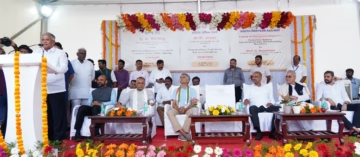




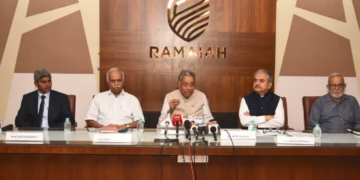



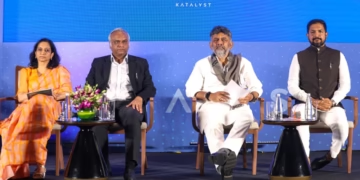



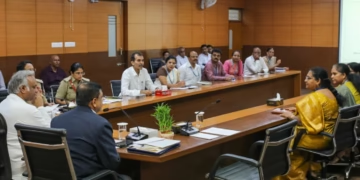
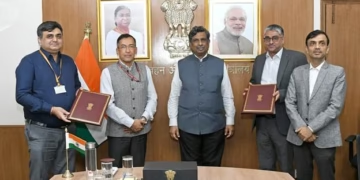













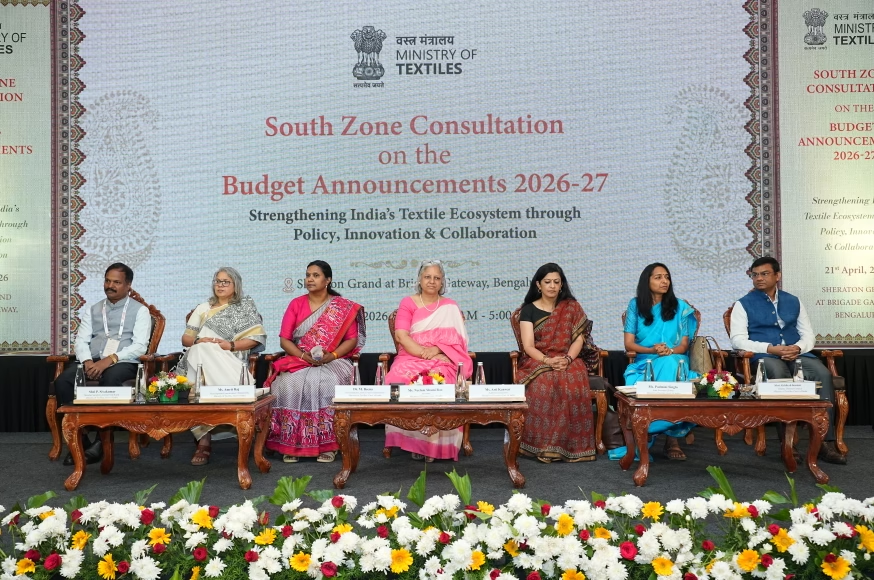
The Ministry of Textiles, Government of India, organized the Regional (South Zone) Consultation Workshop on New Textile Schemes (Budget Announcements 2026-27) at Bengaluru on 21.04.2026. The workshop brought together officials from Ministry and it’s verticals, representatives from Southern States and Union Territories, along with stakeholders and industry personal from the textile sector to deliberate on key initiatives announced in the Union Budget 2026-27.
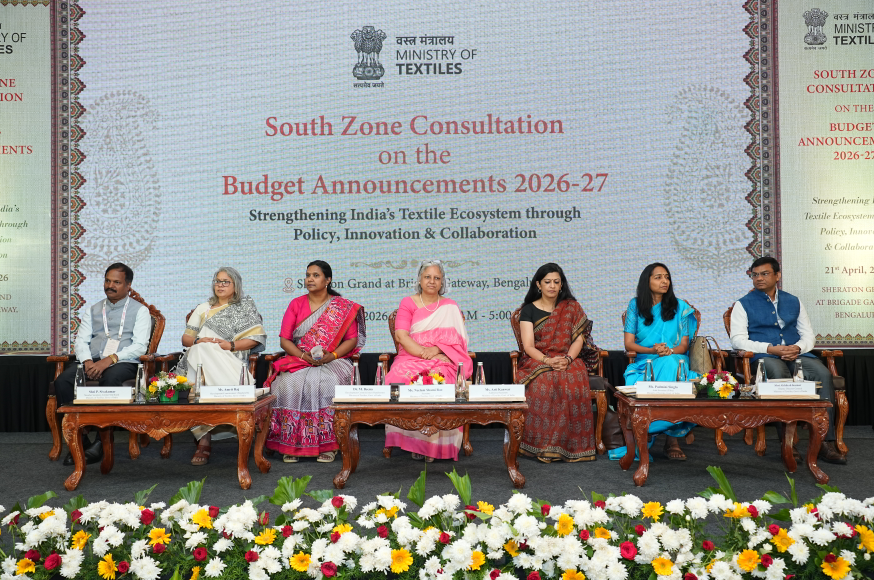

Addressing the gathering, Secretary, Ministry of Textiles, Smt. Neelam Shami Rao, IAS, Secretary, Ministry of Textiles emphasized that the textile sector is poised to play a pivotal role in achieving the vision of a developed India by 2047. She highlighted the need for strengthening forward and backward linkages across the value chain, with equal focus on quality and quantity, modernization, circularity and evolving consumer preferences. She also stressed the importance of effective utilization of pre and post-consumer textile waste.
Dr. M. Beena, IAS, Development Commissioner (Handlooms), highlighted that the schemes announced in the Union Budget 2026-27 are designed to provide integrated support to the textile sector and will significantly benefit artisans, weavers, and other stakeholders.
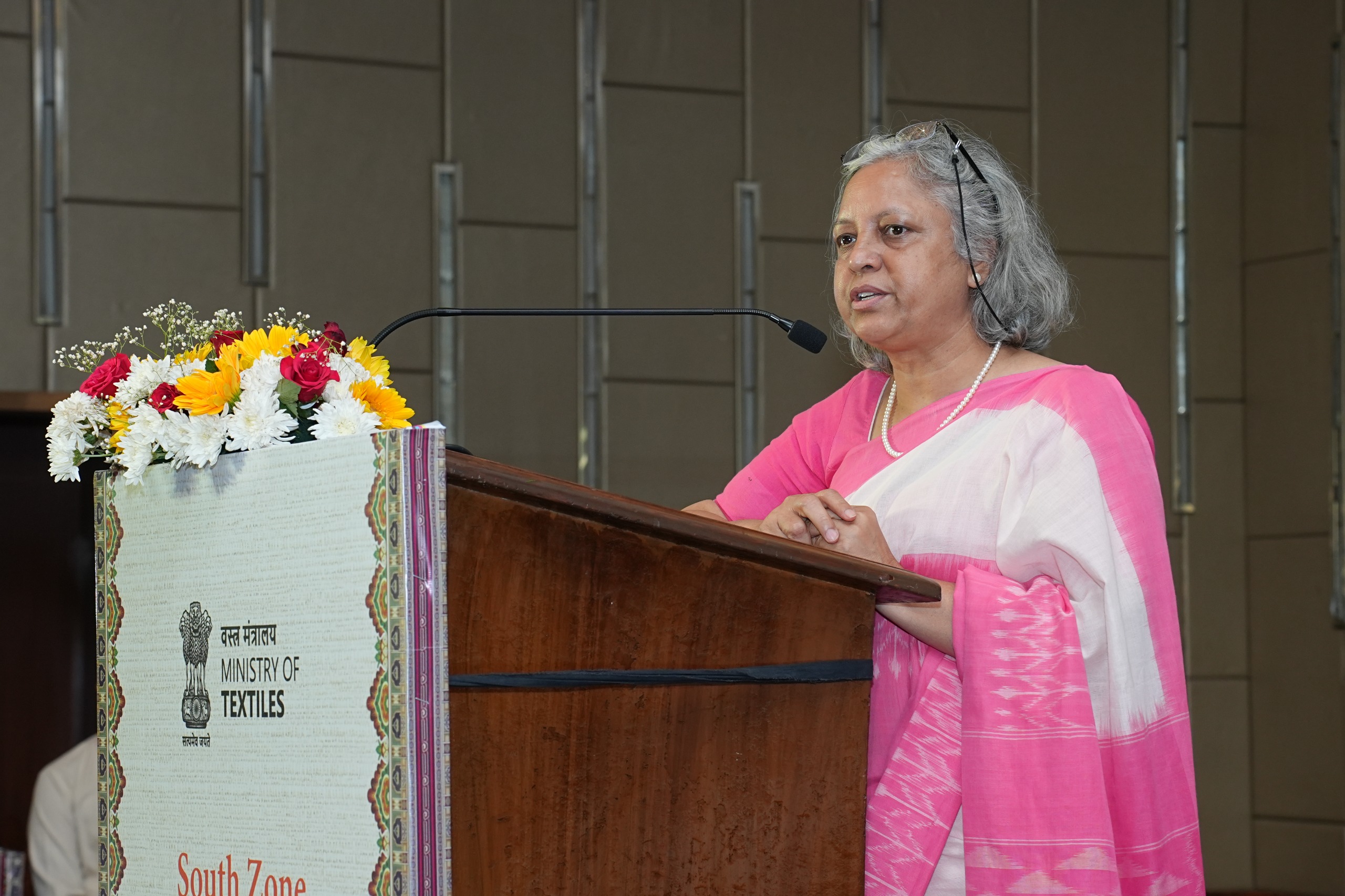

Smt. Padmini Singla, IAS, Joint Secretary, Ministry of Textiles, addressed queries and provided clarifications during the consultation with State departments on the new schemes. She also took note of the challenges faced by the States and outlined strategies and solutions for effectively addressing them.
Smt. Arti Kanwar, IAS, Additional Secretary, Ministry of Textiles, elaborated on key incentives and policy support measures, including subsidies for modernization and promotion of indigenous machinery manufacturing. She highlighted provisions such as Employment Linked Incentives (ELI), top-up subsidies, wage subsidies, and coverage under ESIC and EPF. She also emphasized strengthening cluster infrastructure, fostering innovation and branding, development of plug-and-play textile parks, and establishment of Textile Seva Kendras to support the industry.


Akhilesh Kumar, Deputy Director General, Ministry of Textiles, highlighted that Samarth 2.0 focuses on skill empowerment through multiple approaches, including introduction of traditional and industry-relevant courses, use of mobile-based technologies, creation of a pool of trained workforce, and provision of dual certifications to support academic and career progression.
P. Sivakumar, IFS, Member Secretary, Central Silk Board, underscored that all initiatives should remain stakeholder-centric and aligned with the Hon’ble Prime Minister’s vision of “Farm to Foreign”, ensuring holistic development of the sector.
The workshop included detailed discussions on major schemes such as the Integrated Programme for Textile Sector, National Fibre Scheme (NFS), Textile Expansion & Employment (TEEM) Scheme, National Handloom & Handicraft Programme (NHHP), Samarth 2.0, Tex-Eco Initiative, Mega Textile Parks, and the Mahatma Gandhi Gram Swaraj Initiative (MGGSI), aimed at strengthening the textile value chain, promoting sustainability and generating employment.