



















![[ L to R ]Mr. Rohan Ganapathy, Co-Chairman, CII National Committee on Space; Mr. Mallavarapu Apparao, Chairman, CII National Committee on Space; Ms. Jaya Choraria, Deputy Trade Commissioner for South Asia, UK; H.E. Mr. Antonio Bartoli, Ambassador of Italy to India; Dr. Pawan Goenka, Chairman, IN-SPACe; Dr V. Narayanan, Secretary, Department of Space; Chairman, Space Commission; and Chairman, ISRO; Mr. Shashwat Goenka, Vice President, CII; H.E. Mr. Philip Green OAM, High Commissioner of Australia to India; Mr. ISHII Yasuo, Senior Vice President, JAXA; Mr. Radha Krishnan A, Chairman and Managing Director, NSIL](https://24x7newsworld.com/wp-content/uploads/2026/09/Screenshot-2026-09-08-at-20-52-52-DSC_6125.JPG-JPEG-Image-6048-×-4024-pixels-—-Scaled-14_-360x180.avif)


















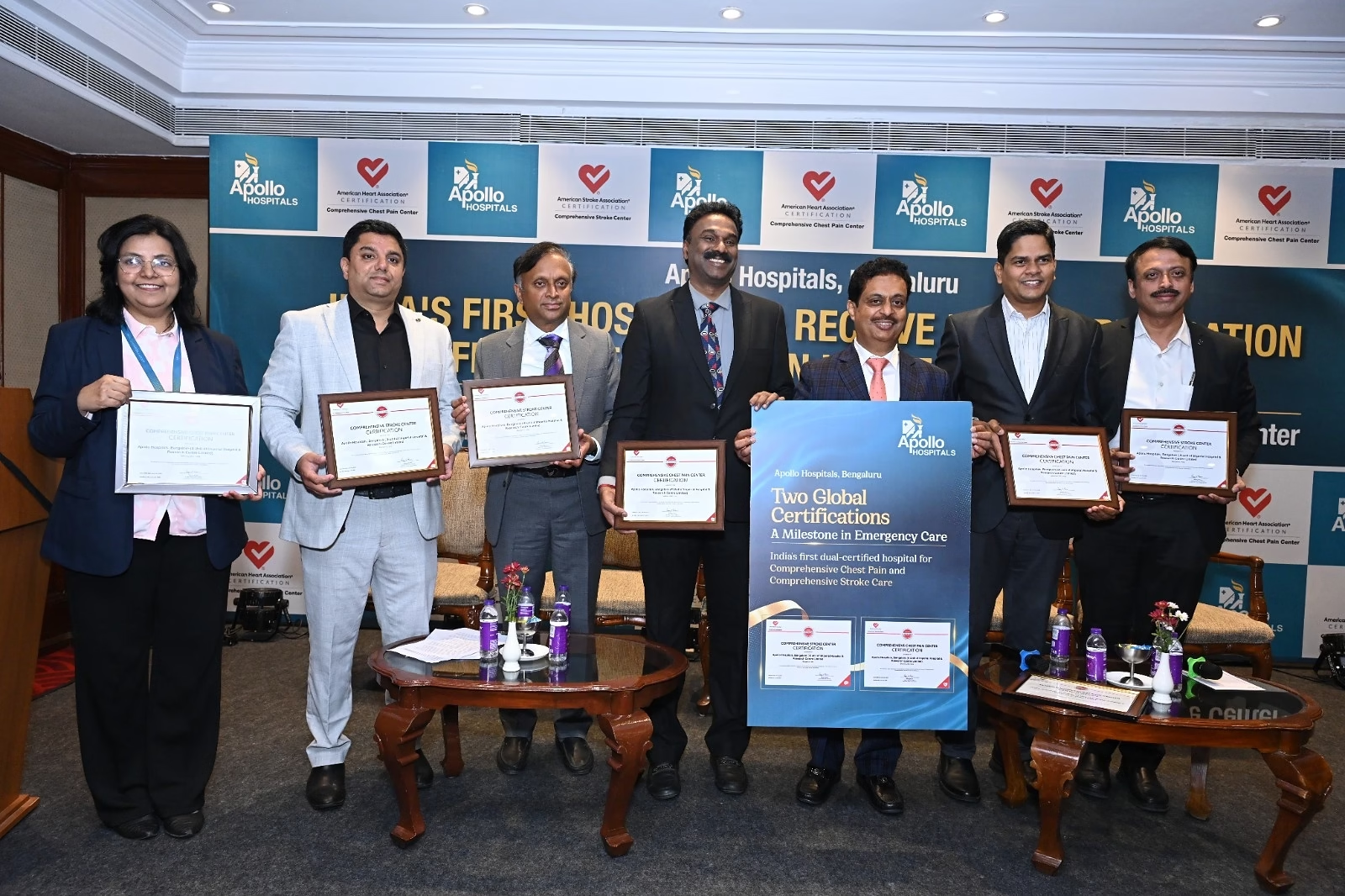
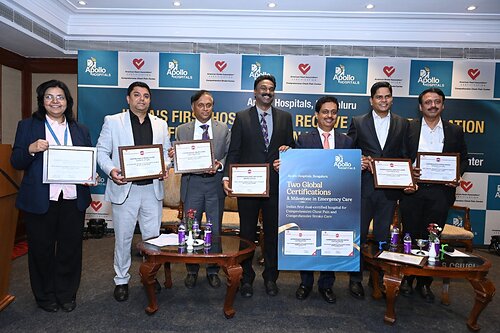
BENGALURU, India, June 30, 2026 – Apollo Hospitals, Bangalore has become the first hospital in India to receive both the Comprehensive Stroke Center and Comprehensive Chest Pain Center certifications from the American Heart Association® (AHA), marking a significant milestone in emergency care for two of the country’s most time-critical medical conditions.
Stroke is the fourth leading cause of death and the fifth leading cause of disability in India, while cardiovascular disease accounts for nearly 36% of all deaths among adults aged 30–69 years[1]. As the burden of these conditions continues to rise, improving hospital preparedness and reducing the time taken to diagnose and treat patients have become critical to improving survival and recovery. Karnataka is estimated to have around 500,000 people living with stroke, placing a significant burden on the state’s healthcare system.[2] At the same time, Apollo Hospitals’ Health of the Nation 2026 report found that 45% of asymptomatic individuals who underwent coronary calcium scoring already showed evidence of coronary artery calcification, highlighting how serious heart disease often develops without warning until an emergency occurs.
Against this backdrop, the dual certification follows an independent evaluation of the hospital’s preparedness to manage patients with suspected stroke or acute heart attack—from arrival in the emergency department through diagnosis, intervention and critical care.
In both stroke and acute heart attack, every minute influences the chances of survival and long-term recovery. With cardiovascular disease and stroke continuing to place a significant burden on India’s healthcare system, improving emergency preparedness has become as important as expanding access to specialised treatment.
Unlike programmes that assess individual departments, these certifications evaluate how an entire hospital functions during medical emergencies. Emergency physicians, neurologists, cardiologists, radiologists, interventional specialists, intensive care teams and nursing staff are assessed on their ability to work seamlessly through standardised care pathways designed to minimise delays and improve outcomes.
D.P. Suresh, M.D., FAHA, Incoming Chair of the American Heart Association’s International Committee, said, “For people experiencing stroke or an acute heart attack, timely diagnosis and coordinated treatment can significantly influence recovery. The American Heart Association’s certification programmes recognise hospitals that demonstrate consistent adherence to internationally accepted standards across the continuum of emergency care. Apollo Hospitals, Bangalore has successfully met the rigorous requirements for both Comprehensive Stroke Center and Comprehensive Chest Pain Center certification.”
Commenting on the milestone, Dr. A.N. Venkatesh, Senior Consultant, Head and Regional Director, Emergency Departments, Apollo Hospitals, Karnataka, said, “When someone arrives with symptoms of a stroke or heart attack, every clinical decision must be made quickly and in a coordinated sequence. That demands experienced teams, clearly defined treatment pathways and seamless collaboration across specialties. This milestone reflects years of strengthening our emergency response processes so that patients receive the right intervention at the earliest possible opportunity.”
The Comprehensive Stroke Center certification recognises hospitals equipped to manage complex stroke cases through advanced imaging, specialised neurological expertise, emergency interventions and continuous monitoring. The Comprehensive Chest Pain Center certification acknowledges hospitals that can rapidly identify and treat acute coronary syndromes, including ST-elevation myocardial infarction (STEMI), where restoring blood flow without delay is critical.
Akshay Oleti, CEO, Apollo Hospitals, Karnataka Region, added, “Clinical excellence today extends beyond medical expertise to the strength of the systems that support patient care. Benchmarking against internationally recognised standards encourages continuous improvement, greater consistency in care delivery and stronger organisational readiness during medical emergencies. This achievement reinforces our focus on building resilient care models that can respond effectively when every minute matters.”
The American Heart Association’s certification programmes encourage hospitals to adopt globally benchmarked approaches for managing cardiac and stroke emergencies. By evaluating emergency readiness, multidisciplinary coordination, clinical governance and continuous quality improvement, the programme promotes structured systems of care aimed at improving outcomes for patients facing life-threatening cardiovascular and neurological emergencies.